RF signal recognition on CPU
Name the known emitters. Say so when one is new.
What it ignores vs. When it speaks
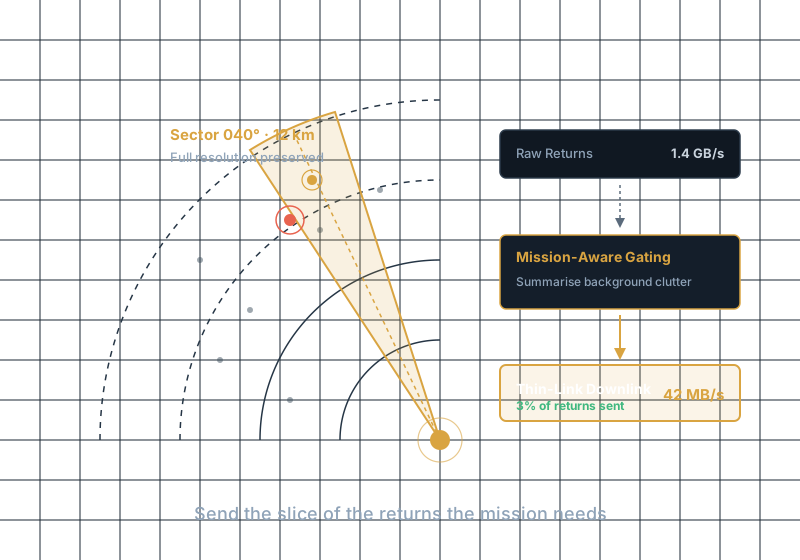
Tactical edge systems cannot waste compute or bandwidth. The model spends energy only when evidence satisfies strict mission criteria.
What it ignores
Signals it already recognises with high confidence, logged without an alert.
Unknown emitter
Does not match any known modulation
Not guessed · features attached for the analyst
How it decides
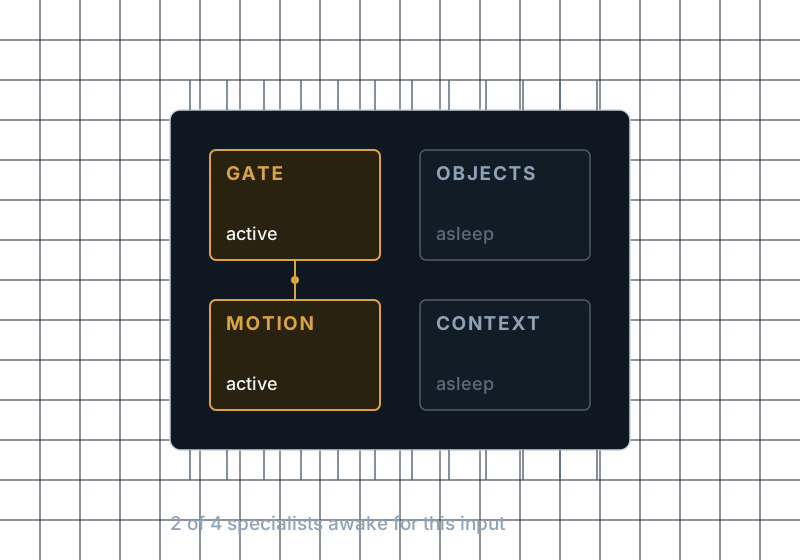
Every incoming sensory event moves through four verifiable operational phases:
Ignore
Signals already recognized with high confidence are logged silently without triggering unnecessary alerts.
Recruit
Classical interpretable features (cumulants, cyclostationary, symbol rates) run on tree ensembles on CPU.
Refuse
An open-set novelty check refuses to force an unfamiliar or anomalous signal into a known class.
Record
Every emitter classification lists the underlying physical signal features that drove the decision.
Technical Readiness & Stack Architecture
Measured Benchmark Results
Built on the MIT-licensed TorchSig library. A feature-based stack may trail a large network on raw accuracy at low SNR, and we will report that trade.
Interfaces & Deployment
Interoperable Mission Applications
Ready to Evaluate This Pipeline on Your Silicon?
We provide containerized binaries, sample sensor traces, and zero-trust edge benchmarks for pilot programs.