It speaks
Unknown emitter
Does not match any known modulation
Not guessed · features attached for the analyst
Name the known emitters, and flag the one that is new.
StatusPrototype
Sparse Energy Gating
Tactical edge systems cannot waste compute or bandwidth. The model spends energy only when evidence satisfies strict mission criteria.
It ignores
Signals it already recognizes with high confidence, logged without an alert.
It speaks
Does not match any known modulation
Not guessed · features attached for the analyst
4-Move Gating Architecture
Every incoming sensory event moves through four verifiable operational phases:
Signals already recognized with high confidence are logged silently without triggering unnecessary alerts.
Classical interpretable features (cumulants, cyclostationary, symbol rates) run on tree ensembles on CPU.
An open-set novelty check refuses to force an unfamiliar or anomalous signal into a known class.
Every emitter classification lists the underlying physical signal features that drove the decision.
Maturity & Interfaces
Cross-Domain Synergies
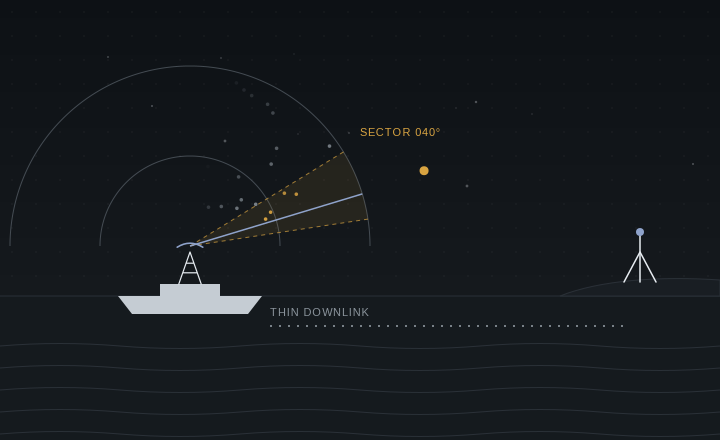
Edge sensing
Send only the slice of the returns the mission needs.
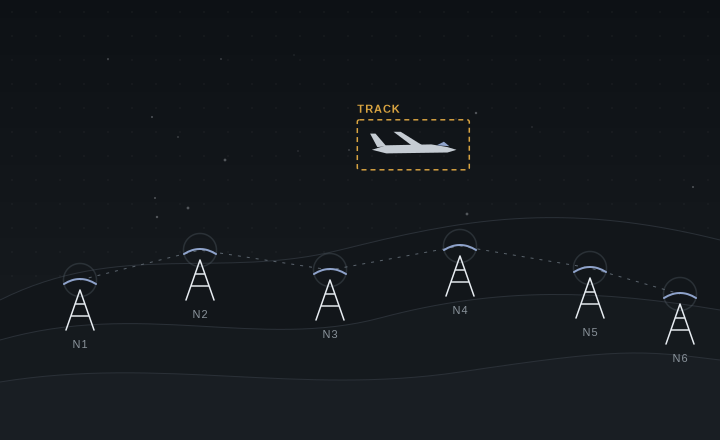
Edge sensing
Many cheap nodes. Only the one that saw something speaks.
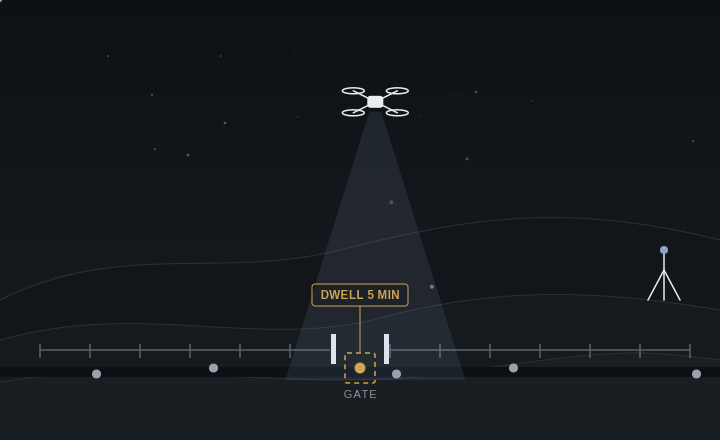
Edge sensing
A drone on a thin link should send findings, not video.
We provide containerized binaries, sample sensor traces, and zero-trust edge benchmarks for pilot programs.
Initiate Technical Evaluation