It speaks
Person loitering at the gate
Stationary 4 min where people usually pass
Evidence: 2 image chips · confidence 0.88
A drone on a thin link should send findings, not video.
StatusResearch preprint
Sparse Energy Gating
Tactical edge systems cannot waste compute or bandwidth. The model spends energy only when evidence satisfies strict mission criteria.
It ignores
People and vehicles doing what the scene does every day. Frames where nothing changed since the last look.
It speaks
Stationary 4 min where people usually pass
Evidence: 2 image chips · confidence 0.88
4-Move Gating Architecture
Every incoming sensory event moves through four verifiable operational phases:
The onboard model learns normal baseline kinematics for each ground sector and ignores routine activity.
Only tracks exhibiting anomalous behavior (e.g. loitering at a gate) trigger deep mission card checks.
If the sensor has not observed a scene long enough to establish normal, it explicitly reports unconfirmed.
Each report transmits a compact semantic packet containing the firing rule, an image chip, and cryptographic hash.
Maturity & Interfaces
Cross-Domain Synergies
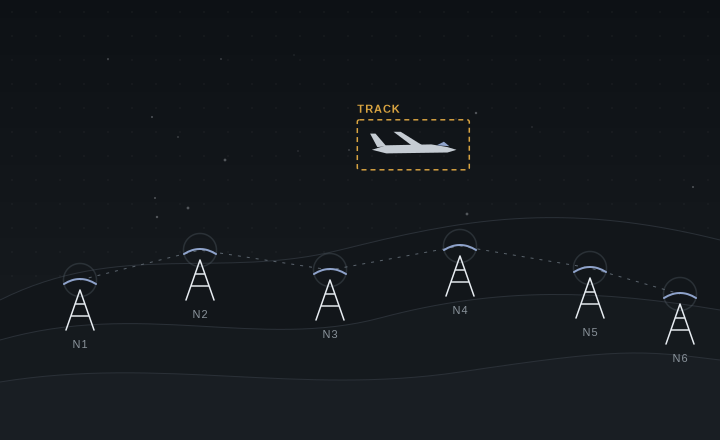
Edge sensing
Many cheap nodes. Only the one that saw something speaks.
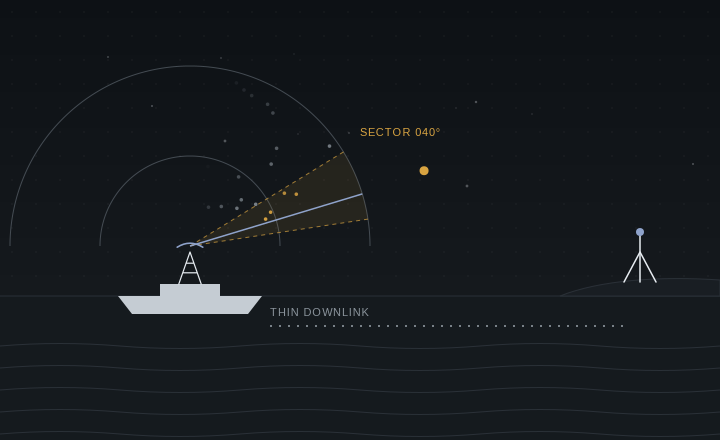
Edge sensing
Send only the slice of the returns the mission needs.
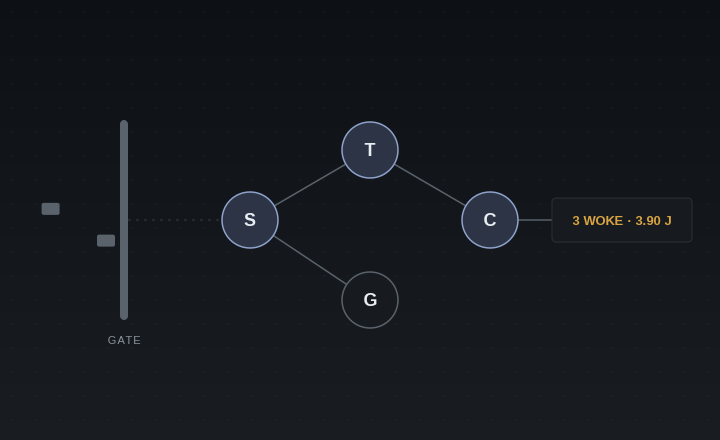
Edge sensing
Do not shrink the model. Shrink how much of it has to run.
We provide containerized binaries, sample sensor traces, and zero-trust edge benchmarks for pilot programs.
Initiate Technical Evaluation