It speaks
Inner race defect
Peak at 5.4× shaft speed, above frozen baseline
Name the part · 0.75 s window
Name the failing part before the next trap, not after.
StatusPrototype
Sparse Energy Gating
Tactical edge systems cannot waste compute or bandwidth. The model spends energy only when evidence satisfies strict mission criteria.
It ignores
Healthy vibration. Regimes the monitor was never commissioned on, which it refuses to score.
It speaks
Peak at 5.4× shaft speed, above frozen baseline
Name the part · 0.75 s window
4-Move Gating Architecture
Every incoming sensory event moves through four verifiable operational phases:
Routine healthy vibration is ignored; uncommissioned operating regimes are refused from scoring.
Bearing geometry equations derive expected defect frequencies (e.g. 5.4× shaft speed) in 0.75s windows.
Without a valid baseline for the current operational regime, the engine declines to generate false alarms.
Every alarm explicitly names the Lowest Replaceable Unit (LRU), frequency peak, and spectral evidence.
Maturity & Interfaces
Cross-Domain Synergies
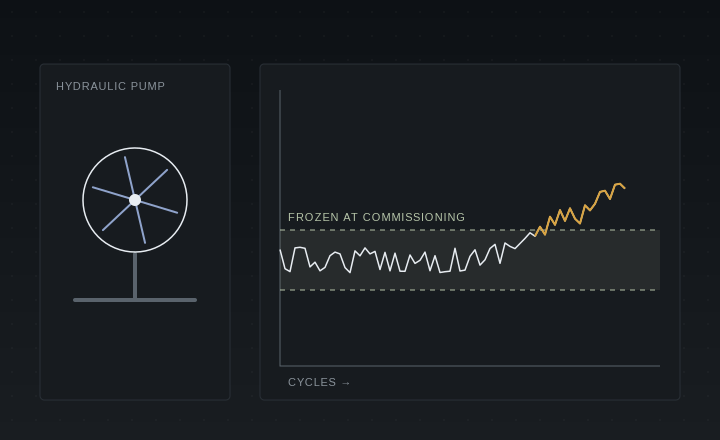
Sustainment
A frozen baseline, and alarms from machines it never met.
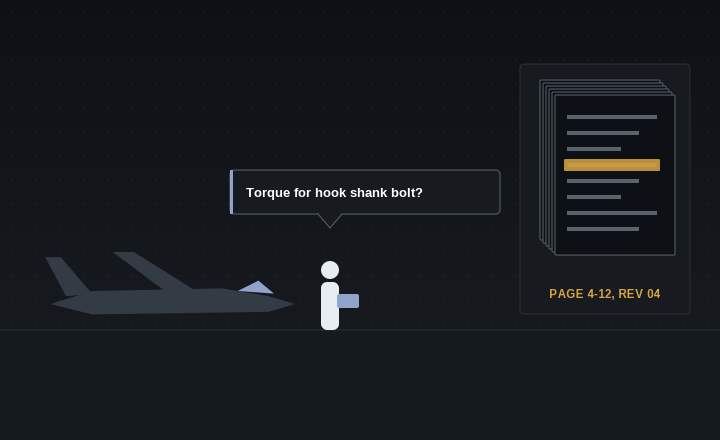
Sustainment
A maintainer's question, answered from the page itself.
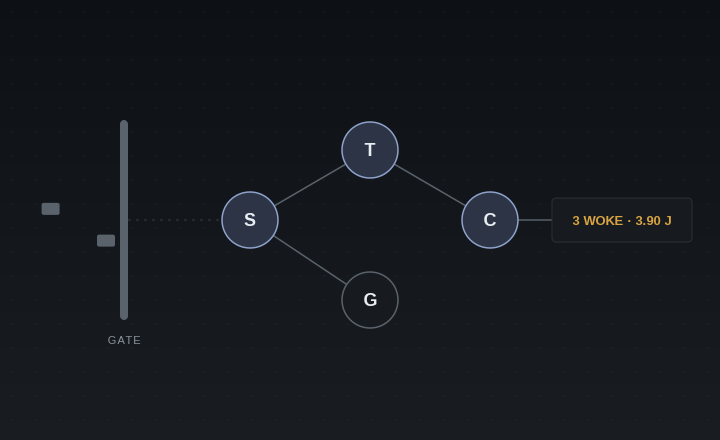
Edge sensing
Do not shrink the model. Shrink how much of it has to run.
We provide containerized binaries, sample sensor traces, and zero-trust edge benchmarks for pilot programs.
Initiate Technical Evaluation